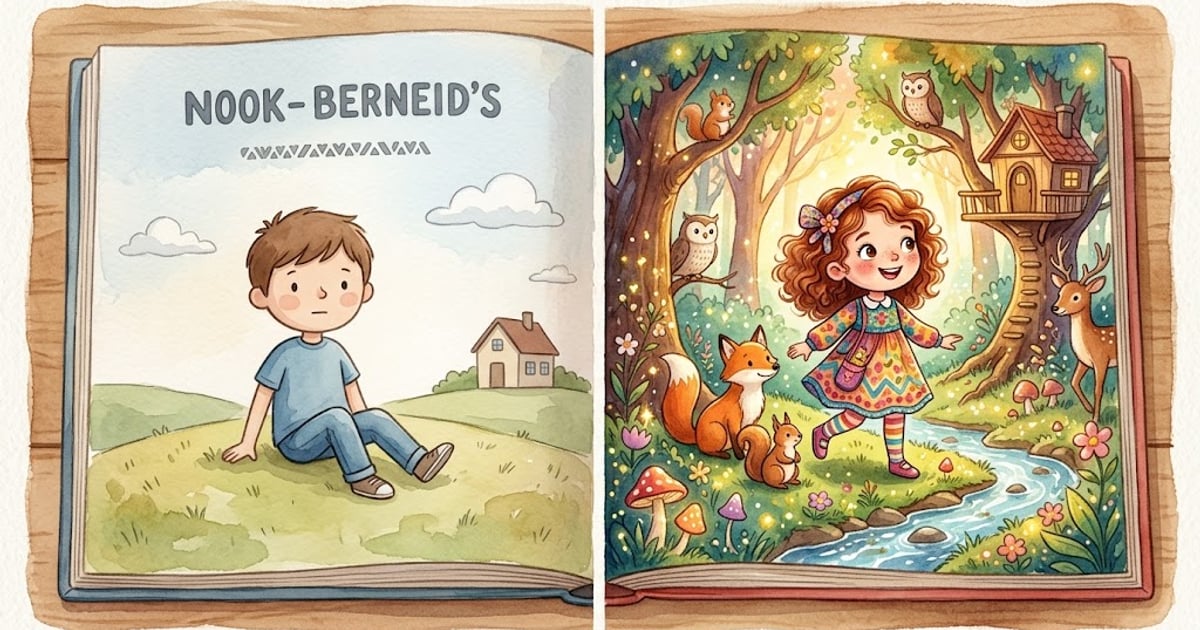
Children read personalized books three to five times more often than generic ones. They comprehend 30% more of the material. They interact verbally with the story at double the rate. These aren't marketing claims — they're findings from reading behavior studies that have reshaped how educators and parents think about early literacy.
So does that mean generic picture books are obsolete? Not at all. But the gap between personalized and generic reading experiences is wider than most parents realize, and understanding that gap changes how you build a home library that actually gets used.
Key Takeaways
- Children read personalized books 3–5x more often than traditional picture books, driven by self-recognition and emotional investment
- Comprehension scores improve by roughly 30% when a child sees themselves as the protagonist
- Verbal interaction during reading — questions, comments, retelling — doubles with personalized content
- Generic books remain essential for exposing children to diverse perspectives and unfamiliar worlds
- The strongest home library combines both types: personalized for engagement anchors, generic for breadth
What the Research Actually Says
The idea that children engage more deeply with stories featuring themselves isn't new. Developmental psychologists have studied self-referencing in children's media since the 1980s. But the data has become substantially stronger over the past decade as personalized books moved from hand-crafted novelties to mass-market products.
The headline stat — children reading personalized books 3 to 5 times more frequently — comes from publisher-reported data aggregated across multiple personalized book platforms. The mechanism is straightforward: when a child recognizes themselves in a story, they request it again. And again. The book stops being something a parent initiates and becomes something the child pulls off the shelf independently.
The 30% comprehension improvement is equally intuitive once you understand the psychology. Self-referencing — processing information in relation to oneself — is one of the most powerful encoding strategies in cognitive psychology. When a child encounters their own name and likeness in a story, the narrative automatically becomes more personally relevant. That relevance translates directly into better memory formation, stronger vocabulary retention, and deeper understanding of story structure.
Perhaps the most interesting finding is the doubling of verbal interaction. During shared reading of personalized books, children ask more questions ("Why am I going there?"), make more predictions ("I think I'm going to find the treasure!"), and retell more story elements afterward. This increased verbal engagement is exactly what literacy researchers look for — it's a leading indicator of reading readiness and long-term literacy outcomes.
Self-Identity and Representation: Why It Matters So Much
For children between ages two and seven, the question "Where am I in this story?" is more than idle curiosity. It's developmentally central. Children in this age range are actively constructing their sense of self — figuring out who they are, what they look like, and where they fit in the world around them.
Personalized books answer that question directly. The child is there, on the page, navigating challenges and celebrating victories. The psychological impact is significant: children who see themselves represented in stories show higher self-esteem, greater confidence in new situations, and stronger identification as "someone who reads."
This representation gap is especially pronounced for children from underrepresented backgrounds. The Cooperative Children's Book Center has tracked diversity in children's publishing for decades, and while representation has improved, children of color, children with disabilities, and children from non-traditional families still see themselves far less frequently in mainstream picture books. Personalized books sidestep this problem entirely — every child is the protagonist, regardless of what they look like.
There's also a name effect worth noting. Hearing or reading one's own name activates unique neural pathways — the brain literally processes it differently than other words. When a personalized book weaves a child's name throughout the narrative, each mention creates a small spike of attention and engagement that generic books simply cannot replicate.
Personalized vs Generic: A Direct Comparison
Let's compare the two approaches across six dimensions that matter most to parents and educators.
| Dimension | Personalized Books | Generic Books |
|---|---|---|
| Engagement | 3–5x higher re-read rates; children self-select the book independently | Engagement varies by title; dependent on topic interest and illustration appeal |
| Relevance | Directly relevant — child is the protagonist with their name, appearance, and sometimes interests | Relevant only if the child connects with the character or theme; hit-or-miss |
| Rereadability | Extremely high — the personal connection doesn't fade with repeated readings | Moderate — beloved titles get reread, but most cycle out after a few weeks |
| Educational Value | 30% better comprehension; stronger vocabulary retention through self-referencing | Depends on book quality; best-in-class titles are excellent for specific skills |
| Emotional Connection | Deep — child experiences pride, agency, and belonging as the story's hero | Variable — ranges from deep (a favorite classic) to indifferent |
| Cost | $5–$50 per book depending on format; digital options bring costs down significantly | $5–$20 for most picture books; library access makes cost effectively zero |
The pattern is clear: personalized books win on engagement, relevance, rereadability, and emotional connection. Generic books compete on cost (especially through libraries) and on a dimension that doesn't appear in this table but matters enormously — breadth of exposure.
When Generic Books Are Still the Better Choice
A home library built entirely of personalized books would actually be a problem. Here's why.
Children need windows, not just mirrors. The educational researcher Rudine Sims Bishop coined the concept of books as "mirrors, windows, and sliding glass doors." Personalized books are excellent mirrors — they reflect the child's own identity back to them. But children also need windows into lives, cultures, and experiences different from their own. A child in Ohio needs to encounter stories set in Lagos. A child with two parents needs to meet characters being raised by grandparents. Generic picture books provide this crucial exposure to the wider world.
Library exploration builds discovery skills. Part of becoming a reader is learning to browse — flipping through unfamiliar books, judging covers (yes, kids absolutely judge books by covers), and discovering new interests through serendipity. This skill develops at the library shelf and the bookstore display, not through a personalization interface. The unpredictability of generic books is a feature, not a bug.
Classic literature carries cultural value. There's a reason certain picture books have endured for decades. Where the Wild Things Are, The Very Hungry Caterpillar, Goodnight Moon — these books create shared cultural touchstones. When your child starts school and a teacher references a classic title, having that shared context matters for social connection and classroom participation.
Diverse perspectives build empathy. Research consistently shows that reading stories from perspectives different from one's own builds empathy and social cognition in young children. A personalized book, by definition, centers the child's own perspective. Generic books that center other characters — particularly characters from different backgrounds — develop the empathy muscles that personalized books don't exercise.
The Sweet Spot: Building a Library That Works
The most effective home library isn't all personalized or all generic. It's a deliberate mix that leverages the strengths of each.
Use personalized books as engagement anchors. These are the books that get your reluctant reader to the couch. The books that make reading feel exciting rather than educational. For a child who resists reading, a personalized book where they're the hero of an adventure they chose can be the gateway that makes all other reading possible.
Use generic books for breadth and discovery. Library visits, bookstore browsing, and curated recommendations from teachers and other parents fill in the world around those personalized anchors. Aim for diversity in every sense — diverse characters, diverse settings, diverse storytelling styles, and diverse topics.
Rotate based on your child's phase. A child going through a "nothing interests me" reading slump? Lean harder on personalized books to reignite engagement. A child who only wants to read about themselves? Introduce generic books with characters they'll identify with for reasons beyond appearance — shared interests, similar challenges, matching humor.
A practical ratio that many literacy-focused parents land on: two or three personalized books as permanent favorites, supplemented by a rotating collection of ten to fifteen generic titles that cycle through the library every few weeks. The personalized books provide stability and engagement. The generic books provide novelty and breadth.
How AI Personalization Changed the Game
The personalized book market existed long before AI. Companies like Wonderbly (originally Lost My Name) pioneered the space with template-based books where you could insert a child's name and select basic appearance traits. These books were charming and well-made, but limited — you were choosing from pre-designed templates, not creating something truly unique.
AI changed three things simultaneously.
Speed. A personalized book that once took days or weeks to produce now generates in minutes. This isn't just a convenience improvement — it changes the use case entirely. When a book takes weeks, you order one for a birthday. When it takes minutes, you create one for a Tuesday bedtime because your child had a rough day and needs to be the hero of something.
Depth of personalization. Template-based systems could insert a name and maybe adjust hair color. AI-driven platforms can now generate stories tailored to a child's specific interests, incorporate their actual appearance from a photo, adapt reading level, and even weave in real details from the child's life. The difference between "a story with your name in it" and "a story about you" is the difference between a novelty and a meaningful reading experience.
Cost. Physical personalized books from premium publishers run $35 to $55 each. Digital AI-generated books can cost under $10 — or be included in a subscription that provides unlimited stories. When the cost barrier drops that dramatically, personalized books shift from "special occasion gift" to "everyday reading tool."
Platforms like StoryPic represent the current state of this evolution. Upload a photo, choose a theme and artistic style, and receive a fully illustrated educational storybook where your child is recognizably the protagonist — across every page, in the art style you selected. The technology behind this involves converting the photo into a character description that guides AI illustration, which means the child's likeness is maintained consistently without the photo itself ever touching the image model.
This matters for two reasons parents care about: privacy (the photo stays private) and consistency (the character looks like your child on page one and page twenty).
Market Validation: This Isn't a Fad
The personalized children's book market reached $569 million in 2025 and is projected to grow at a 9.2% compound annual growth rate through 2031, potentially reaching $1.05 billion. That growth rate is roughly triple the overall children's book market growth.
What's driving it isn't just parental interest — it's the convergence of several trends. AI illustration quality crossed the threshold from "interesting experiment" to "genuinely beautiful" around 2024. Print-on-demand infrastructure matured to the point where a single custom book costs barely more to produce than a mass-market title. And a generation of parents who grew up with personalized digital experiences simply expects that their children's books can be customized too.
The entry of major publishers into the space confirms the trajectory. When Penguin Random House acquires a personalized book company, that's not a bet on a niche — it's a signal that personalization is becoming a standard feature of children's publishing.
For parents, the practical takeaway is that personalized books aren't going away, the options are getting better every quarter, and the price is trending downward. If you tried a personalized book two years ago and were underwhelmed, the current generation of tools — particularly the AI-driven ones — is worth a second look.
Ready to Create a Personalized Story?
Upload a photo and watch your child become the hero — your first story is free.
Create Your Story Free →Frequently Asked Questions
At what age do personalized books have the biggest impact?
The sweet spot is ages two through seven, which aligns with peak identity formation and the critical window for developing reading habits. Children in this range are most responsive to seeing themselves in stories because they're actively building their self-concept. Toddlers (2–3) respond primarily to hearing their name read aloud. Preschoolers (4–5) start recognizing their likeness in illustrations and connect more deeply with the character. Early readers (6–7) begin reading their own name in the text, which creates a powerful motivation to decode more words on the page. Personalized books can work outside this range, but the engagement multiplier is strongest during these years.
Are personalized books actually educational, or just entertaining?
Both — and the research supports this. The 30% comprehension improvement isn't just about enjoyment; it reflects genuine cognitive benefits of self-referencing during reading. When children process story information through the lens of "this is happening to me," they form stronger memories, retain vocabulary better, and understand narrative structure more deeply. Personalized educational storybooks take this further by deliberately embedding learning objectives — counting, social-emotional skills, science concepts — into stories where the child is the protagonist. The personal connection makes the educational content stickier, not less rigorous.
Can personalized books replace bedtime story variety?
They shouldn't replace variety entirely, but they can anchor it. Many families find that having two or three personalized favorites provides reading stability — the books a child always wants to revisit — while rotating generic books provide novelty and exposure to new ideas. If your child refuses to read anything except their personalized book, that's actually a positive sign of deep engagement. Use it as leverage: "Let's read your story first, then try this new one." The personalized book becomes the reward that makes broader reading possible. Over time, the reading habit built through personalized books transfers to generic books naturally.
How is AI personalization different from just putting a child's name in a template?
The difference is substantial. Template-based personalized books (the kind that have existed for decades) swap in a name and sometimes let you choose hair color or skin tone from a few options. The story, illustrations, and structure are identical for every child — only surface details change. AI personalization generates unique stories based on the child's interests, creates illustrations from actual photos so the character genuinely looks like the child, adapts vocabulary to the appropriate reading level, and can incorporate real details from the child's life. It's the difference between a form letter with your name mail-merged in and a letter someone actually wrote to you. AI-generated children's books have crossed the quality threshold where this deeper personalization translates into measurably better engagement and learning outcomes.
Ready to Create a Personalized Story?
Upload a photo and watch your child become the hero — your first story is free.
Create Your Story Free →